

The Advantages of Fiberglass Pools over Gunite & Vinyl Liner
The Advantages of Fiberglass Pools over Gunite & Vinyl Liner
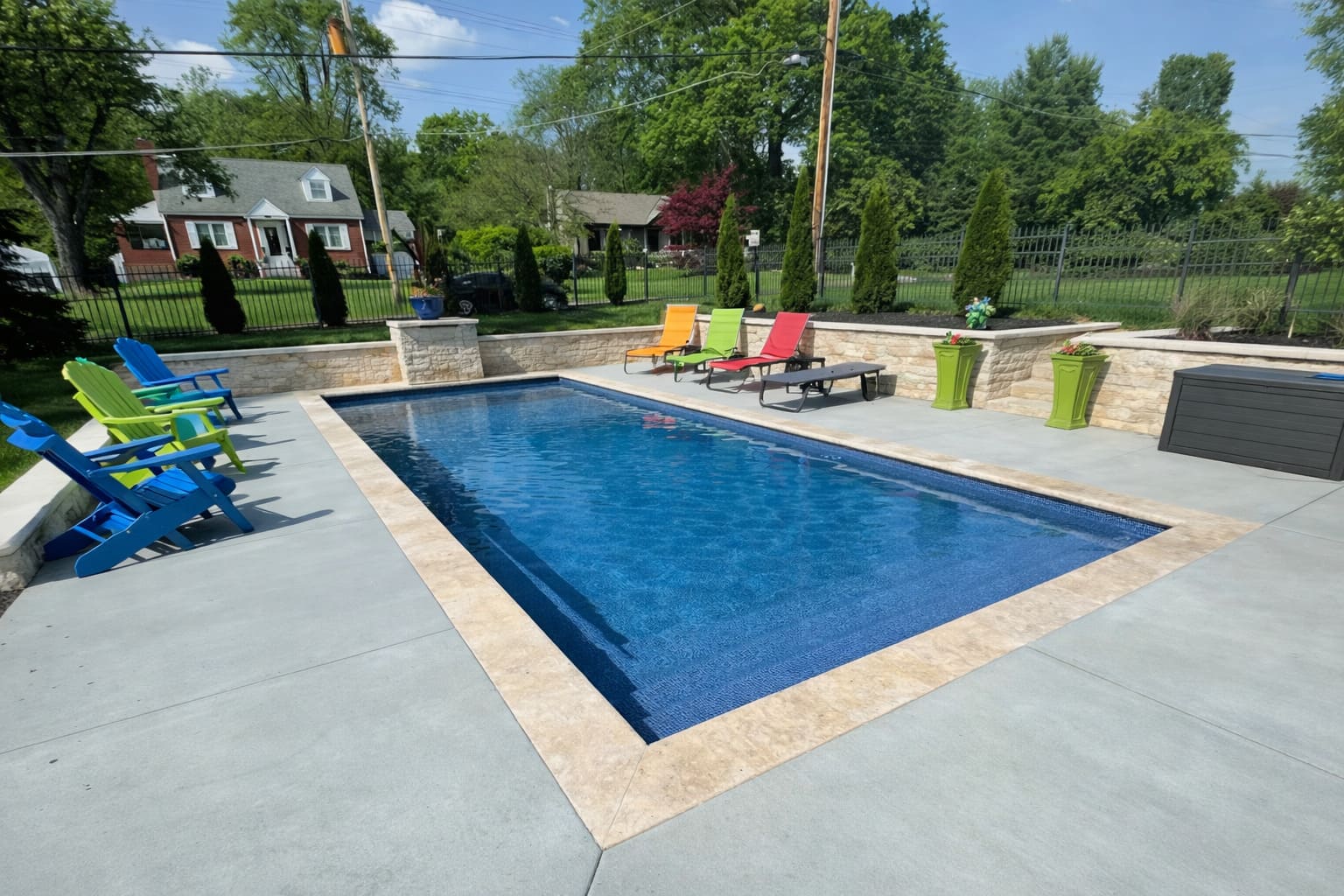
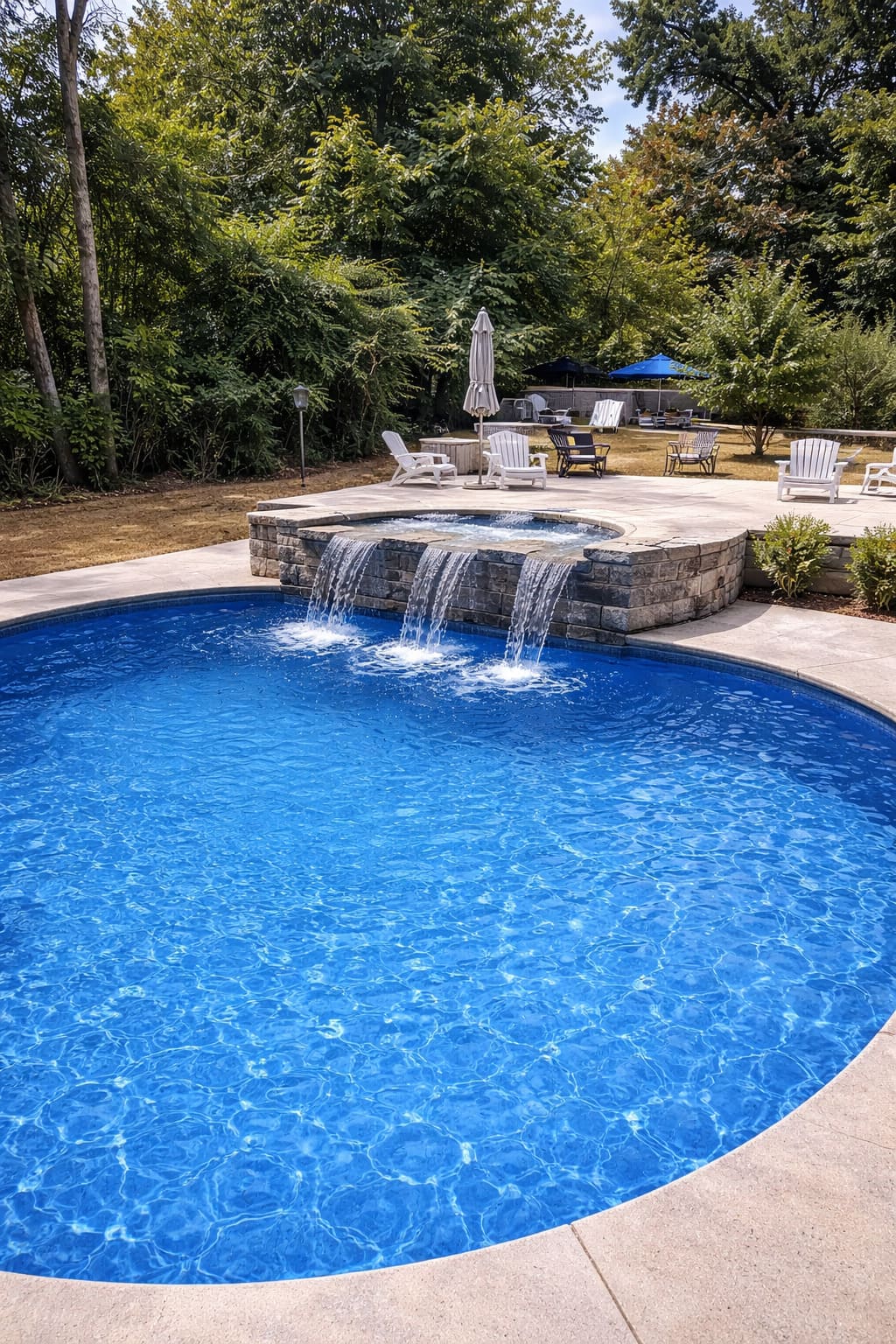
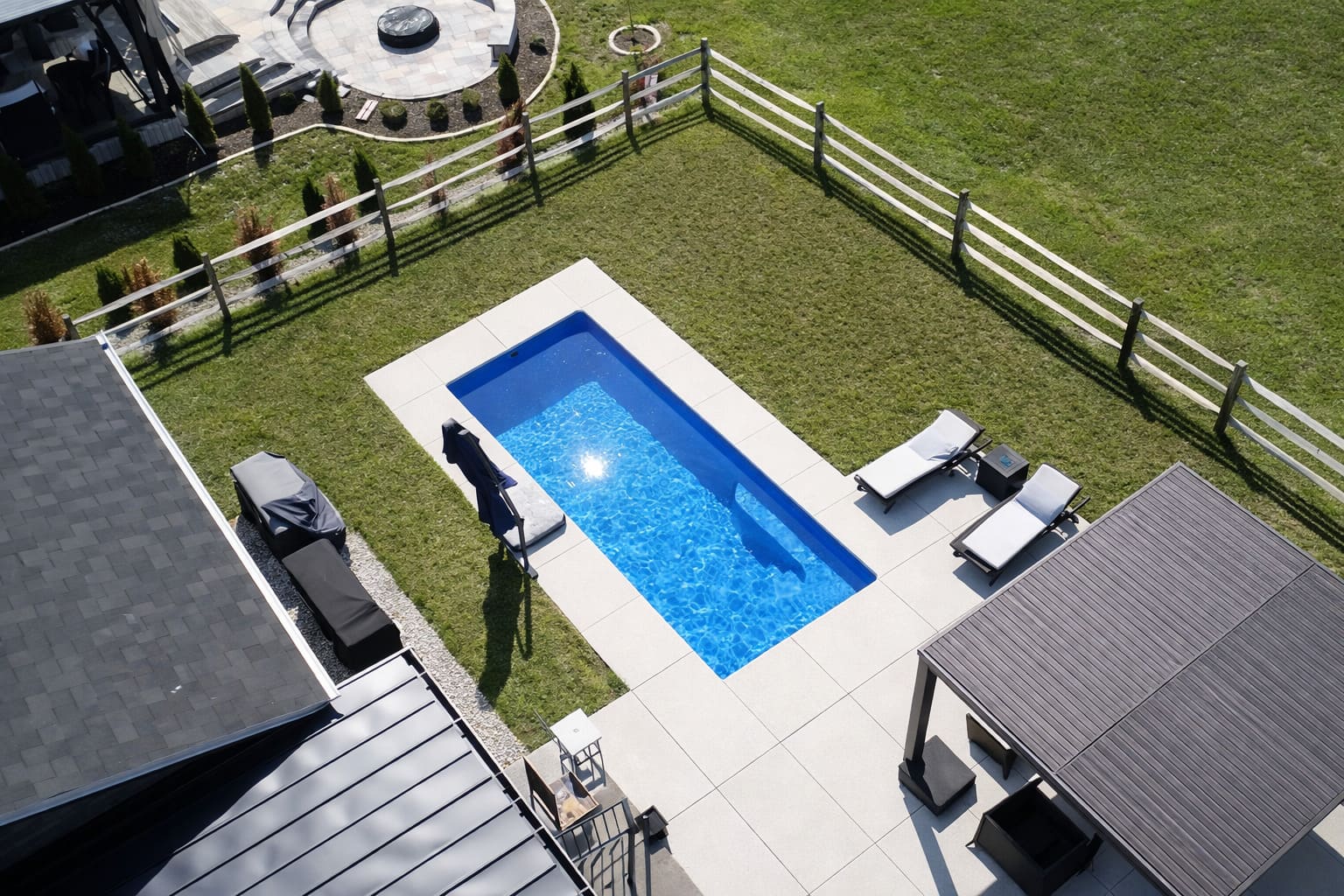
If you’re researching pool options, you’ve probably come across three main types: fiberglass pools, gunite (concrete), and vinyl liner. Each has its advocates. But after 35 years of installing pools, we’ve seen firsthand how these three technologies perform over the long haul.
The differences are significant. And for most homeowners, they matter a lot.
Here’s an honest breakdown of what sets fiberglass pools apart.
What Is a Fiberglass Pool?
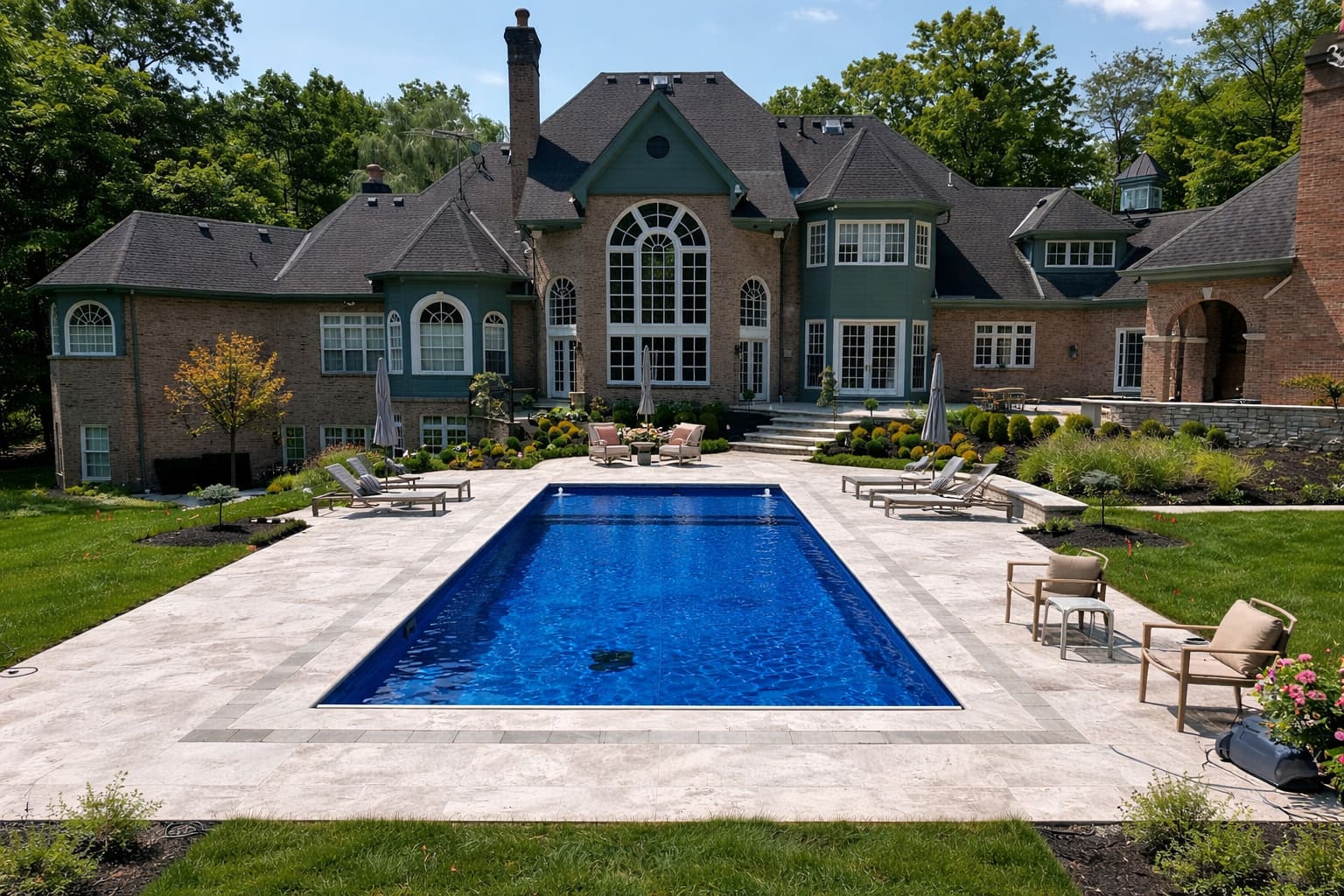
Large rectangular pool framed by a luxury home and formal patio.
A fiberglass pool is a one-piece shell manufactured in a factory, delivered to your home, and lowered into an excavated hole in your yard. The shell is made from layers of fiberglass reinforced with resin, finished with a smooth gel coat interior.
Because the shell arrives pre-formed, installation is fast. Most fiberglass pools are installed and ready to swim in as little as seven days. There’s no waiting weeks for concrete to cure or liners to be custom-ordered and installed.
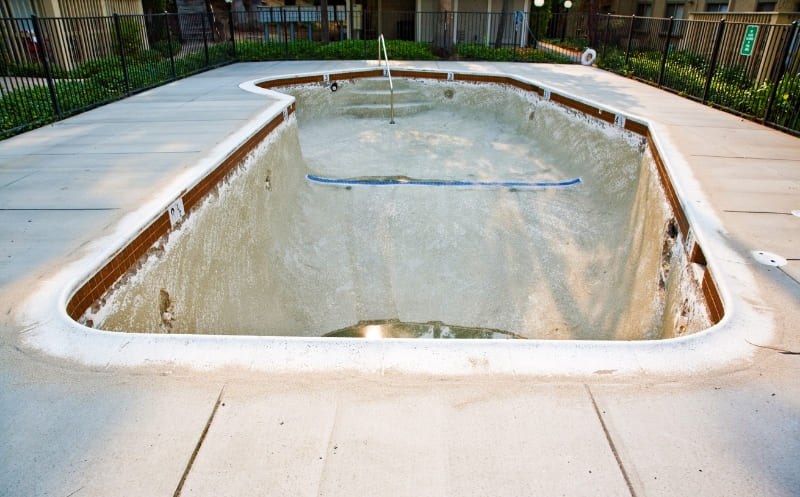
A drained gunite pool awaiting replaster, a common and costly maintenance reality for concrete pool owners.
Fiberglass Pools vs. Gunite: Why Concrete Falls Short
Gunite pools are built on-site by spraying a mixture of concrete and sand over a steel rebar framework. The result is a completely custom shape, but that customization comes with a long list of long-term costs.
Maintenance Is the Biggest Difference
Gunite pools have a rough, porous surface that algae loves to cling to. You’ll spend more time brushing, more money on chemicals, and more effort keeping the water balanced. Most gunite pool owners run their pumps longer and use significantly more chemicals than owners of fiberglass pools.
Resurfacing Is Inevitable
Gunite pool interiors wear down over time. Most homeowners need to acid wash, replaster, or fully resurface their gunite pool every 10 to 15 years. That process can cost $10,000 or more and requires draining the pool completely.
Rigid Structures Crack Under Pressure
Gunite does not flex. When the ground shifts due to seasonal soil movement, the stress shows up as cracks in the shell, the plaster, and around fittings. Fiberglass pools have high tensile strength that allows the shell to flex up to 12 inches without compromising its structure. In regions with active freeze-thaw cycles, that’s not a minor advantage. It’s a critical one.
The bottom line on gunite: higher ongoing maintenance costs, inevitable resurfacing expenses, and a surface that works against you over time.
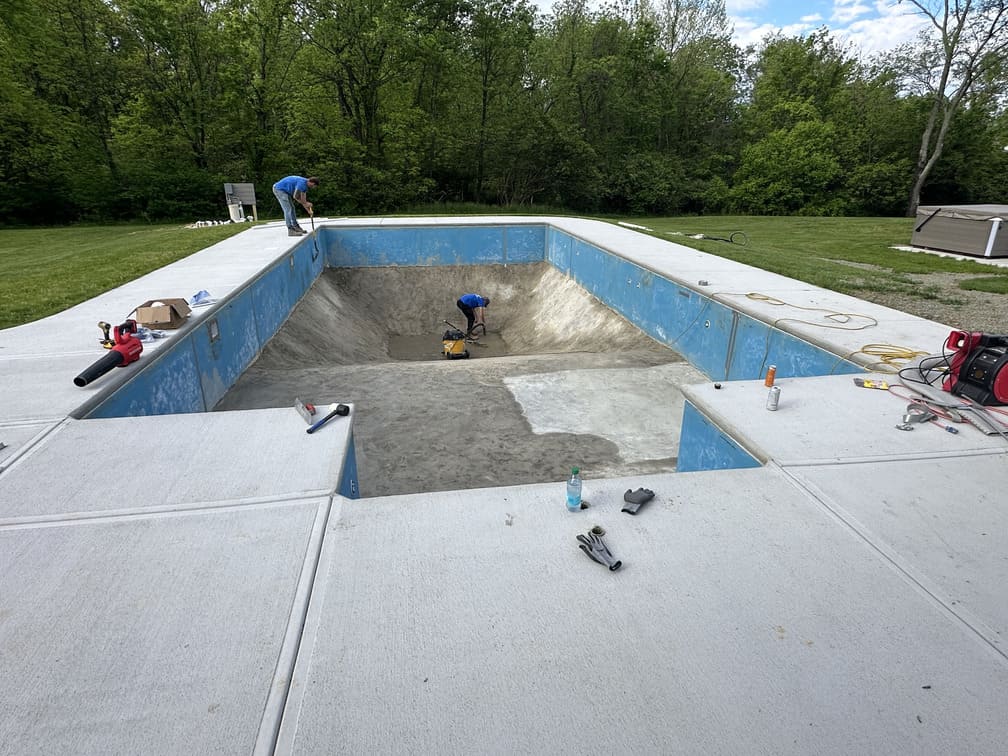
A vinyl liner pool mid-renovation, with the base being smoothed and prepped before the new liner is installed.
Fiberglass Pools vs. Vinyl Liner: The Hidden Cost of Liners
Vinyl liner pools offer a relatively low upfront cost, which makes them attractive at first glance. But vinyl liner pools carry a recurring expense that most buyers don’t fully factor in before signing.
Liners Need to Be Replaced
Under normal conditions, a vinyl liner lasts roughly 8 to 12 years before it needs to be replaced. Each replacement typically costs $3,000 to $5,000 or more, and that’s before accounting for repairs to fittings, walls, or the pool floor that often come up during a liner change.
Liners Are Vulnerable
A sharp toy, an animal’s claws, or a tree branch can puncture a liner. Even without physical damage, liners stretch, wrinkle, fade, and pull away from the coping track over time. Each of these issues requires either a repair or a full replacement.
Draining Creates Risk
Vinyl liner pools sometimes need to be drained for repairs or liner replacements. Any time a pool is fully drained, there is a risk of hydrostatic pressure from groundwater pushing up from below. A properly installed fiberglass pool rarely needs to be drained, removing that risk almost entirely.
The bottom line on vinyl liner: the lower upfront cost gets offset quickly by liner replacement cycles, repair costs, and the ongoing vulnerability of a surface that simply wears out.
The Fiberglass Pools Advantage: Lower Cost Over Time
When you compare total lifetime costs, fiberglass pools consistently win.
Fewer Chemicals
The smooth, non-porous gel coat surface resists algae and keeps water balanced longer. Most fiberglass pool owners spend significantly less on chemicals each year.
No Resurfacing
Fiberglass pools come with a lifetime structural warranty. There is no plastering, no replastering, and no resurfacing, ever.
No Liner Replacements
Unlike vinyl pools, there is nothing to replace on a fiberglass pool interior under normal conditions.
Lower Energy Costs
Because fiberglass pools require less filtration time to maintain water quality, many owners run their pumps less and reduce energy costs over the season.
Installation Speed: A Real Advantage
One of the most practical advantages of fiberglass pools is how fast they go in. Most gunite pools take 3 to 6 months from start to swim. Vinyl liner pools are faster, but still require significant time for wall installation, liner measurement, and custom ordering.
Fiberglass pools can be installed and ready to swim in as little as seven days. That’s not a sales pitch. It’s simply how fiberglass pools work. The shell is manufactured off-site in a controlled environment, delivered ready to install, and placed into your prepared excavation. The speed doesn’t cut corners. It’s built into the process.
Who Chooses Fiberglass Pools?
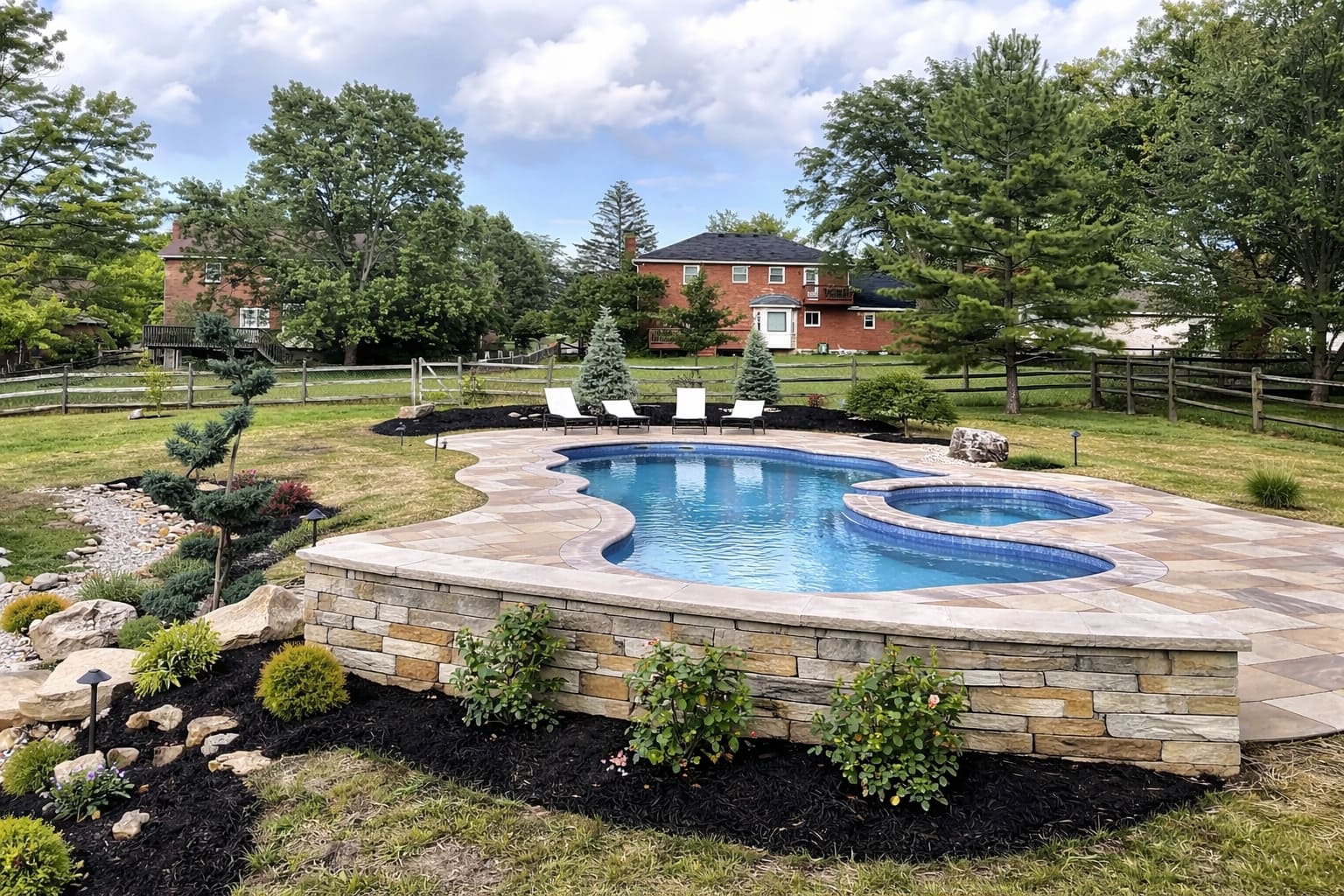
Over 60% of our new pool sales are to homeowners who have owned a pool before. Many of them have lived with a gunite or vinyl liner pool for years. They know what the maintenance looks and feels like. They’ve paid for the resurfacing, replaced the liners, and spent weekends brushing and balancing.
When it’s time for a new pool, they choose fiberglass pools. That track record tells you more than any comparison chart.
Ready to Learn More?
Aquamarine Pools & Spas has been Cincinnati’s oldest and first exclusively fiberglass pool installer since 1988. If you’re considering a new pool and want an honest conversation about your options, we’re here to help.
Request a free estimate today and find out why fiberglass pools are the right choice for your backyard.